That 'Clean' Drink Is Keeping You Hooked: How Sweeteners Are Wrecking Your Detox From the Inside Out
You did everything right. You tossed the soda, bought the fancy wellness drinks, maybe even started mixing up herbal detox teas sweetened with stevia or monk fruit. You're on day four of your cleanse and you feel... weirdly obsessed with sugar. More than before, if you're being honest.
Here's the uncomfortable truth: the sweetener in that "clean" drink might be the exact reason you can't stop thinking about dessert.
This isn't about willpower. It's about biology — specifically, the way your brain and gut respond to sweetness, regardless of where it comes from.
Your Brain Doesn't Care If It's "Natural"
When something sweet hits your tongue, your brain lights up. Dopamine gets released. Your body braces for incoming sugar and starts prepping insulin. This is a deeply wired survival response — one that evolved long before stevia packets existed.
The problem? Your body kicks off that whole hormonal cascade even when no actual sugar follows. Artificial sweeteners like aspartame, sucralose, and acesulfame potassium trigger the same anticipation response, but then deliver... nothing. Your blood sugar doesn't rise. Insulin was summoned for no reason. And your brain, now confused and a little cheated, starts hunting for the real thing.
Research published in Cell Metabolism found that sucralose specifically can increase appetite and reduce feelings of fullness — particularly in people who consume it regularly. That's a rough combo when you're trying to stick to a cleanse.
The 'Natural' Sweetener Trap
Okay, so you're already ahead of the game — you're using stevia or monk fruit, not the artificial stuff. Good instinct. But it's not a complete free pass.
Stevia is derived from a plant and contains zero calories. It doesn't spike blood sugar the way table sugar does. For many people, it's a reasonable option. But here's the catch: stevia is intensely sweet — hundreds of times sweeter than sugar by some measures. Regular exposure to that level of sweetness keeps your palate calibrated to expect big sweetness hits. Whole foods start tasting bland. Fruit doesn't cut it. You find yourself reaching for more and more just to feel satisfied.
Monk fruit has a similar profile. It's natural, low-glycemic, and popular in the wellness world. But again, it's extremely sweet, and that trains your taste buds in ways that work against a cleanse.
Coconut sugar and raw honey are often sold as "cleanse-friendly" alternatives in detox recipes. They do have a lower glycemic index than refined white sugar and contain trace minerals. But they still spike blood sugar. They still feed sugar cravings. Calling them detox-friendly is mostly marketing.
Agave nectar is one of the sneakiest offenders. It's heavily marketed as a natural, low-glycemic option — but it's extremely high in fructose, which your liver processes differently than glucose. High fructose intake is actually associated with increased fat storage and liver stress, which is the opposite of what you want when you're trying to cleanse.
What Sweeteners Do to Your Hunger Hormones
Let's get into the hormonal side of this, because it's where things get really interesting.
Two hormones matter most here: ghrelin (the hunger hormone) and leptin (the satiety signal). When these are in balance, you feel hungry when you need to eat and full when you've had enough. Sweet flavors — even from non-caloric sources — can disrupt this balance over time.
Studies have shown that frequent consumption of artificially sweetened beverages is associated with higher ghrelin levels, meaning more hunger. At the same time, some research suggests that certain sweeteners blunt leptin sensitivity, making it harder to register fullness. You're hungrier, less satisfied, and more likely to overeat or crave sweets — all while thinking you made the "healthy" choice.
For anyone doing a cleanse, this is a significant problem. One of the main goals of a good detox protocol is to reset these hormonal signals so your body can communicate hunger and satiety more accurately. Sweeteners — even the "good" ones — can work directly against that reset.
Reading Labels on Detox Products
Here's where it gets frustrating: many products explicitly marketed for cleanses contain sweeteners that undermine the whole point. Detox teas, cleanse juices, protein powders labeled as "detox support," and meal replacement shakes are common culprits.
Things to watch for on labels:
- Sucralose (often listed as Splenda)
- Acesulfame potassium (Ace-K)
- Aspartame
- Erythritol and other sugar alcohols (can cause digestive upset and still trigger sweet cravings)
- "Natural flavors" paired with stevia — this combo is often sweeter than it sounds
- Agave syrup or agave nectar
- Coconut sugar or "organic cane juice" (still sugar)
If a product has more than one sweetener listed, that's usually a sign they're layering flavors to hit a sweetness level that feels satisfying. That's great for palatability. Not so great for breaking the sweet dependency cycle.
Practical Swaps That Actually Work
The goal isn't to suffer through tasteless drinks for two weeks. It's to gradually recalibrate your palate so that natural flavors feel satisfying again. Here's how to do that without white-knuckling it.
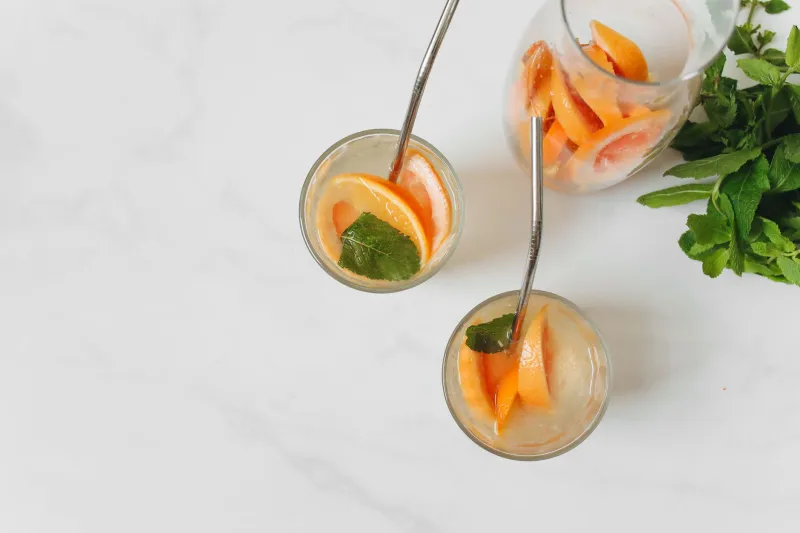
Sparkling water with citrus — A squeeze of lemon, lime, or grapefruit in plain or sparkling water gives you brightness and a little bitterness that actually helps curb sweet cravings. Add a few fresh mint leaves if you want something that feels more "special."
Ginger-lemon hot tea — Steep fresh ginger slices with lemon juice and a tiny bit of raw honey (we're talking a quarter teaspoon, not a tablespoon). The ginger is naturally warming and slightly spicy, which satisfies in a different way than sweetness.
Unsweetened coconut water — Contains natural electrolytes and a very mild sweetness from naturally occurring sugars. It's a much gentler option than sweetened sports drinks or detox tonics. Just check the label — some brands add juice or sweeteners.
Cinnamon in your morning drink — Cinnamon has a naturally sweet flavor profile without any sugar. Adding it to herbal tea or even warm water with lemon can trick your brain into feeling like something sweet happened, while also supporting blood sugar regulation.
Bitter herbs — This one's a longer game, but worth it. Dandelion tea, burdock root, and chicory are all slightly bitter, and bitterness actually signals your digestive system to get moving. Over time, incorporating bitter flavors helps recalibrate your taste buds away from constant sweetness.
The Bigger Picture: Rethinking What a Cleanse Drink Should Do
A real detox drink shouldn't just taste good — it should support your body's natural elimination pathways without hijacking your appetite signals in the process. That means prioritizing hydration, liver support, and mineral balance over palatability.
If your cleanse drink needs a lot of sweetener to be drinkable, that's worth examining. Gradually reducing the sweetness — even if it takes a few days to adjust — is one of the most effective things you can do to break the craving cycle and actually feel the mental clarity that a good cleanse can deliver.
Your taste buds adapt faster than you think. Give them a week of less sweetness and whole fruit will start tasting like dessert again. That's the reset you're actually after.