Old-School Lymph Detox: 6 Time-Tested Techniques That Actually Move the Needle
When people talk about detoxing, they usually zero in on the liver or kidneys. And sure, those organs do a lot of heavy lifting. But there's an entire system quietly doing cleanup work throughout your entire body — one that rarely gets a mention in modern wellness conversations: the lymphatic system.
Your lymphatic network is essentially your body's waste disposal infrastructure. It collects cellular debris, excess fluid, and immune byproducts from tissues and shuttles them toward elimination. Unlike your cardiovascular system, though, the lymph has no pump. No heart. It relies entirely on muscle movement, breathing, and manual stimulation to keep things flowing.
When lymph stagnates — which is surprisingly easy to do in a sedentary, stress-heavy American lifestyle — the results can include puffiness, fatigue, sluggish immunity, skin issues, and a general feeling of being "off." What's interesting is that generations of women and healers before us understood this intuitively, even without the scientific vocabulary to explain it. The techniques they used? Most of them still hold up.
Here are six of them, dusted off and explained.
Why the Lymphatic System Is the Detox Pathway Nobody Talks About
Your body contains roughly twice as much lymphatic fluid as blood. This fluid bathes every cell, picking up metabolic waste, pathogens, and toxins before filtering them through lymph nodes — clusters of immune tissue found in your neck, armpits, groin, and abdomen. From there, the cleaned fluid re-enters the bloodstream for final elimination via the liver and kidneys.
When lymph flow slows down, those lymph nodes get congested. Immune function dips. Cellular waste accumulates in tissues. You might notice swollen glands, persistent fatigue, or skin that looks dull and congested. Supporting lymphatic drainage isn't a luxury wellness indulgence — it's basic biological housekeeping.
The six techniques below have all been used for generations. Some are backed by growing clinical research; others are supported by decades of traditional use and a solid physiological rationale.
1. Dry Brushing
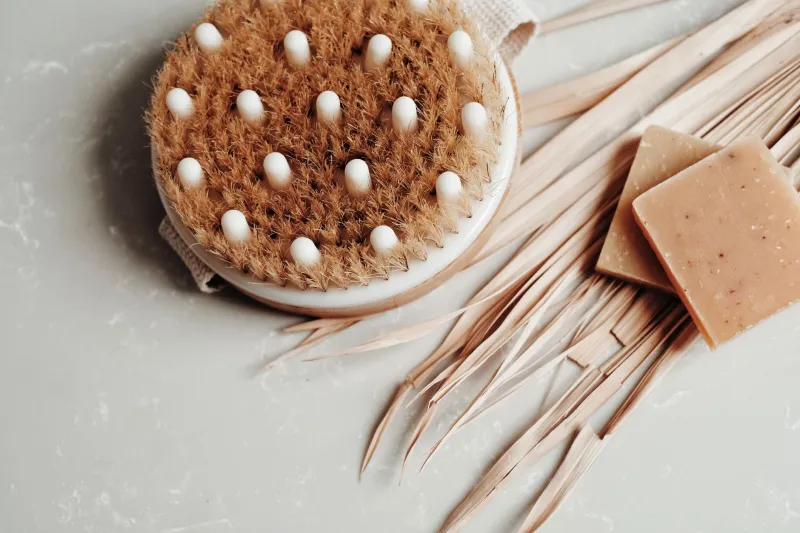
This is probably the most well-known traditional lymph technique, and it's making a well-deserved comeback. Using a firm natural-bristle brush on dry skin before showering, you work from your feet upward toward your heart in long, sweeping strokes — always moving in the direction of lymph flow.
The mechanical stimulation activates superficial lymphatic vessels just beneath the skin, encouraging fluid movement. It also exfoliates dead skin cells, which supports the skin's role as a detox organ. A 2021 review noted that manual stimulation of the skin surface can meaningfully increase lymphatic circulation in superficial vessels.
How to do it: Use a dry natural-bristle body brush. Start at your feet, brush upward toward your groin. Move to your hands, brushing up toward your armpits. Use lighter pressure on your abdomen, brushing in clockwise circles. Do this for 5 to 10 minutes before your morning shower, three to five times per week.
2. Contrast Bathing (Hot-Cold Hydrotherapy)
Alternating hot and cold water exposure was a cornerstone of 19th-century American hydrotherapy — practiced in sanatoriums from Battle Creek, Michigan, to Asheville, North Carolina. The mechanism is straightforward: heat dilates lymphatic vessels; cold causes them to contract. Alternating the two creates a pumping effect.
Modern research on cold exposure has confirmed significant effects on circulation and lymphatic tone. Many practitioners of contrast therapy report reduced swelling, faster muscle recovery, and improved energy levels.
How to do it: In your shower, spend 2 to 3 minutes under warm-to-hot water, then switch to cold for 30 to 60 seconds. Repeat the cycle 3 to 4 times, always finishing on cold. Even once a day makes a difference over time.
3. Rebounding
A mini-trampoline in the living room might look like a relic of the 1980s fitness era, but rebounding is genuinely one of the most effective lymphatic drainage tools available to you. The vertical acceleration and deceleration of bouncing creates a gravitational shift that physically opens and closes lymphatic valves throughout the body.
NASA researchers studying rebounding in the early 1980s found it to be one of the most efficient forms of exercise for stimulating the lymphatic system — a finding that still gets cited today. Even gentle, low-impact bouncing (your heels don't need to leave the mat) is effective.
How to do it: Bounce gently for 10 to 15 minutes daily. You don't need to work up a sweat — a light, rhythmic bounce is enough to activate lymph flow. This is a great option if you work from home or spend a lot of time sitting.
4. Diaphragmatic Breathing
Deep belly breathing is one of the most overlooked lymphatic tools, and it costs nothing. The thoracic duct — the body's largest lymphatic vessel — runs alongside the spine and empties into the bloodstream near the collarbone. Every time your diaphragm descends on an inhale, it creates negative pressure that draws lymph upward through this duct.
Shallow chest breathing, which is how most Americans breathe when stressed or sedentary, barely activates this mechanism. Deep diaphragmatic breathing, on the other hand, can dramatically increase lymphatic flow.
How to do it: Practice 5 minutes of deep belly breathing twice daily. Inhale slowly through your nose for a count of 4, letting your belly expand. Hold for a count of 2. Exhale through your mouth for a count of 6. This also activates the parasympathetic nervous system, reducing cortisol and supporting overall detox.
5. Lymphatic Self-Massage
Professional manual lymphatic drainage (MLD) is a specialized medical massage used to treat lymphedema and post-surgical swelling. But a simplified version can be done at home with meaningful benefit. The key is using extremely light pressure — lymphatic vessels are superficial and respond to gentle touch, not deep tissue work.
How to do it: Using the pads of your fingers, apply very gentle circular pressure starting at the base of your neck, just above the collarbone. This is where lymph empties into the bloodstream, so you want to clear this area first. Then work your way outward — gently sweeping from your jawline toward your ears, and from your armpits toward your collarbone. Spend 5 to 10 minutes on this sequence in the morning or evening.
6. Herbal Lymphatic Tonics
Herbalists have long relied on a category of plants called "lymphagogues" — herbs that specifically support lymphatic movement and lymph node function. Red clover, cleavers, calendula, and burdock root have all been used historically for this purpose, and modern herbalists continue to recommend them.
Cleavers (Galium aparine), in particular, has a strong traditional reputation as a lymphatic herb and is commonly used in Western herbalism for swollen glands and sluggish lymph. Burdock root supports liver function, which is the downstream destination for much of what the lymphatic system clears.
DIY Lymphatic Tonic Recipe:
- 1 tablespoon dried cleavers
- 1 tablespoon dried red clover blossoms
- 1 teaspoon dried burdock root
- 2 cups boiling water
Steep for 15 minutes, strain, and drink as a warm tea. One to two cups daily is a reasonable starting point. As always, check with your healthcare provider if you're pregnant, nursing, or on medications.
Putting It Together: A Simple Weekly Lymph Protocol
You don't need to do all six techniques every day. A realistic rotation might look like this:
- Daily: Diaphragmatic breathing (morning and evening), rebounding (10 minutes)
- 5x per week: Dry brushing before your shower
- 3x per week: Contrast shower
- 2x per week: Self-lymphatic massage
- Daily or as desired: Herbal lymphatic tonic tea
The Bottom Line
Your lymphatic system has been quietly working for you your entire life — and it deserves a little reciprocal attention. These techniques aren't trendy hacks. They're time-tested practices with real physiological logic behind them, rediscovered by every generation that pays attention to how the body actually works. The good news is that supporting your lymph doesn't require a gym membership, expensive supplements, or a weekend retreat. It requires about 20 minutes, a dry brush, and maybe a pot of herbal tea.